


Introduction
A well-designed home is not simply a collection of beautiful rooms. The most successful interiors feel connected from one space to another, while still giving each room its own character.
In a residential project, every decision matters. The layout affects how people move through the home. Materials influence the atmosphere. Lighting changes how finishes and colors are perceived. Furniture determines whether a room feels comfortable or crowded. Even details such as wall treatments, ceiling design and storage can have a significant impact on the final result.
For homeowners in Pakistan, interior planning also needs to respond to the way a home is actually used. Family life, hospitality, privacy, entertaining, storage and individual preferences all influence the design.
A luxury interior, therefore, should not simply look expensive. It should feel considered, balanced and appropriate to the people who live there.
Here is a practical way to approach the process room by room.
1. Start With the Overall Design Direction
Before choosing furniture, colors or decorative pieces, establish the overall visual direction of the home.
Ask a few fundamental questions:
What kind of atmosphere should the home have?
Should it feel warm and welcoming, minimal and calm, dramatic and sophisticated, or a combination of several qualities?
Which materials do you naturally prefer?
Do you respond more to wood, stone, textured surfaces, soft fabrics, metallic details or a simpler combination?
The answers create the foundation for the design.
A useful interior usually has a consistent visual language. This does not mean that every room needs to look identical. Instead, there should be a relationship between the spaces.
For example, similar flooring, wood tones, wall colors or lighting temperatures can visually connect different rooms while allowing individual spaces to have their own identity.
2. Plan the Living Room Around Everyday Life
The living room is often one of the most visually important spaces in a home.
However, good design starts with function rather than decoration.
Consider:
- How many people normally use the room?
- Is it primarily for family time or entertaining guests?
- Does the room need flexible seating?
- Where should the main visual focus be?
- How much storage is needed?
- How does natural light enter the room?
Once these questions are answered, furniture placement becomes much easier.
A premium living room does not necessarily require an enormous amount of furniture. In many cases, fewer carefully selected pieces create a more sophisticated result.
Proportion is especially important.
A large sofa in a relatively small room can make the space feel compressed, while furniture that is too small for a large room can make the interior feel unfinished.
The objective is balance.
3. Give the Dining Area a Clear Identity
The dining space should feel connected to the rest of the home, but it can still have its own character.
The dining table naturally becomes the visual anchor, so its size and position should be considered carefully.
Lighting is particularly important here.
A well-positioned pendant or chandelier can define the dining area while creating a more intimate atmosphere in the evening.
Materials should complement the surrounding interior rather than compete with it.
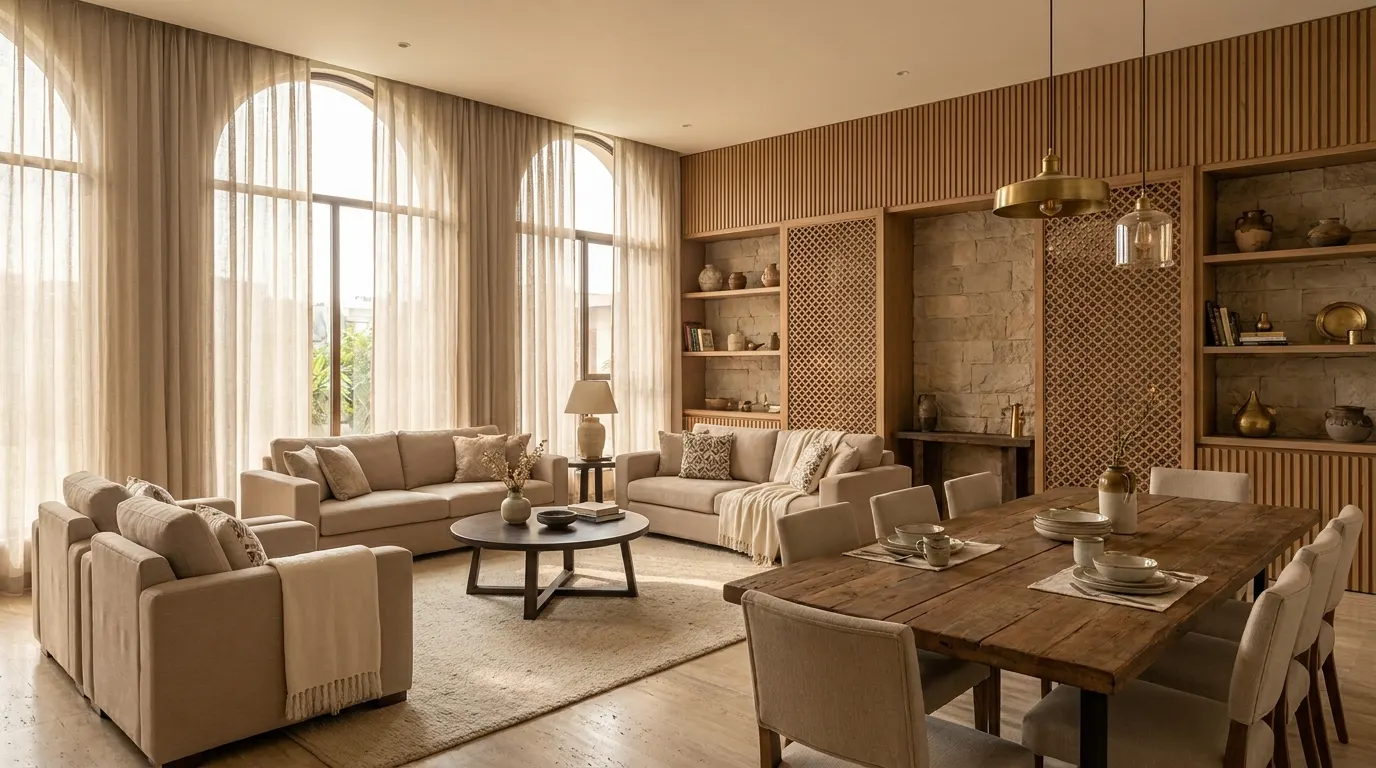
For example, a warm wooden table can work beautifully with neutral walls, textured upholstery and subtle metallic accents.
4. Design the Bedroom for Comfort First
A bedroom should feel different from a social space.
While living rooms may emphasize presentation and entertaining, bedrooms benefit from a calmer and more personal atmosphere.
Start with the bed as the primary element.
The wall behind the bed can become an important design feature through:
- Upholstered panels
- Wood detailing
- Stone or stone-look surfaces
- Textured wall finishes
- Decorative lighting
- A restrained combination of materials
Lighting should also be layered.
Rather than relying on a single bright ceiling light, consider ambient lighting, bedside lighting and subtle accent lighting.
The result should feel relaxing rather than overly bright.
5. Pay Attention to Wardrobe and Storage Design
Storage is one of the areas where appearance and practicality need to work together.
A wardrobe should not simply provide space to store clothing. Its proportions, finishes and hardware can significantly affect the appearance of the bedroom.
Flush doors, integrated handles, glass sections, wood textures and carefully selected lighting can all contribute to a more refined result.
The internal organization matters too.
A visually beautiful wardrobe that is difficult to use is not a successful design.
Good storage should make everyday routines easier.
6. Treat Ceilings and Lighting as Part of the Architecture
Ceilings are sometimes treated as an afterthought, but they can influence the entire character of a room.
A ceiling design can:
- Define different zones
- Introduce indirect lighting
- Add visual depth
- Emphasize architectural proportions
- Create a more intimate atmosphere
Lighting should be considered alongside the ceiling rather than added afterward.
A successful lighting plan usually includes multiple layers.
Ambient lighting
Provides overall illumination.
Task lighting
Supports specific activities such as reading, dressing or working.
Accent lighting
Highlights architectural or decorative features.
When these layers are balanced properly, the interior feels much more sophisticated.
7. Use Materials With Restraint
One of the easiest ways to make a luxury interior feel visually confused is to use too many competing materials.
A stronger approach is often to select a smaller material palette and use it consistently.
For example:
Warm wood + soft neutral fabric + natural stone + restrained metallic detail
can create an elegant foundation without overwhelming the eye.
Texture is also important.
Two materials can share a similar color while creating completely different visual experiences because of their surface qualities.
This is why thoughtful interiors are about more than color selection.
8. Create Visual Connection Between Rooms
A home should feel like one environment rather than a series of unrelated spaces.
That does not mean every room needs the same furniture or colors.
Instead, look for recurring design elements.
These might include:
- Similar wood tones
- Consistent flooring
- Related wall colors
- Repeated metal finishes
- Similar lighting temperature
- Shared architectural details
These connections create continuity.
9. Avoid Following Trends Too Literally
Interior trends can provide inspiration, but a home should not become a showroom for temporary fashion.
Some trends have a very short visual lifespan.
A more timeless approach is to use contemporary elements selectively while keeping the foundation relatively refined and adaptable.
Furniture, artwork and decorative details can be changed more easily later than flooring, ceilings or major built-in elements.
That makes the long-term design decision especially important.
10. Think About the Experience, Not Just the Appearance
The best interiors are experienced throughout the day.
Morning light should feel different from evening lighting.
The living room should be comfortable when the family gathers.
Bedrooms should feel peaceful.
Storage should function without creating visual clutter.
Circulation should feel natural.
These details may not always appear in a photograph, but they are often what make a home genuinely successful.
Final Thoughts
Planning a luxury home interior in Pakistan is ultimately about creating a balance between beauty, comfort, function and personality.
There is no single style that works for every home.
The right design is the one that responds to the architecture, the people living in the space and the way the home is actually used.
At Zain Awan Interior, the focus is on creating residential interiors with thoughtful design, refined details and a strong sense of character.
Have a residential interior project in mind? Start a conversation with Zain Awan Interior on WhatsApp.
WhatsApp: +92 316 5471280